
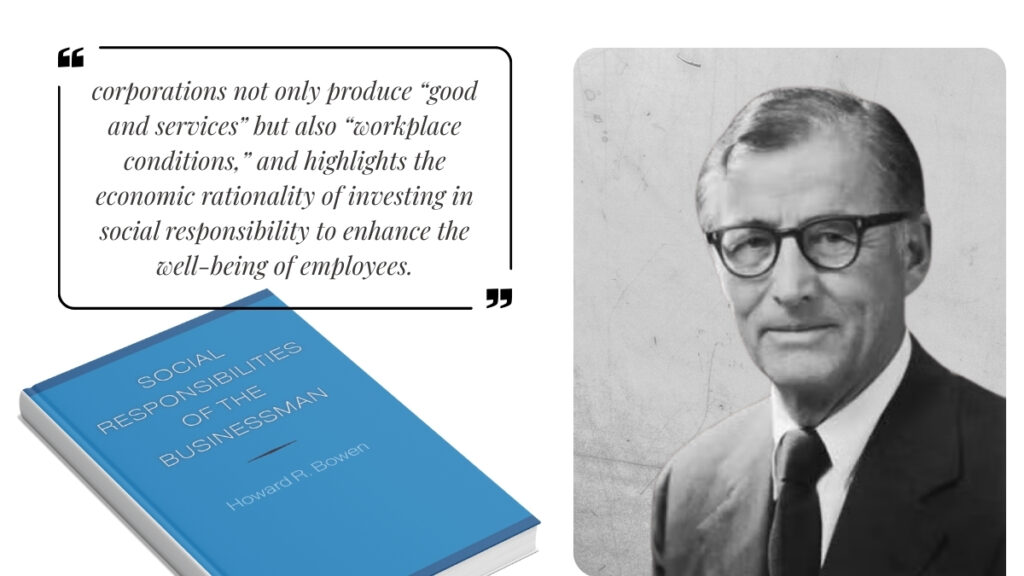
Corporate Social Responsibility (CSR) did not begin as the strategic framework we know today. When Howard Bowen introduced the term in 1953 in Social Responsibilities of the Businessman, he argued that “corporations not only produce goods and services but also workplace conditions,” suggesting that investing in social responsibility enhances both employee wellbeing and organisational performance. His definition shifted philanthropy toward a more systemic understanding of how institutions affect society.
Over the following decades — especially from the 1960s onward — CSR evolved from charitable practice into a recognised organisational responsibility. Today, organisations such as UNESCO and the European Union describe CSR as a holistic approach integrating ethical behaviour, social wellbeing, environmental care and long-term sustainability into everyday operations.
In Europe, this evolution is particularly visible: what was once voluntary is increasingly supported by legal obligations through reporting, transparency and due diligence requirements. This shift reflects a broader truth — that responsible behaviour is no longer optional for any institution.
And CSR is not only a business concern. Every organisation shapes the society around it, and in return, communities expect more than services: they expect trust, accountability and shared value.
For municipalities — operating closest to everyday life — these expectations are even more immediate. CSR becomes not just a concept borrowed from the private sector, but a governance philosophy capable of guiding local development in a more resilient, inclusive and sustainable direction.
While CSR provides a moral and strategic compass, its real strength emerges when values and action meet — and this often happens through partnerships. Municipalities sit at the centre of community life, understanding local needs better than any other actor. When companies seek to create positive social or environmental impact, it is often the municipality that can translate those intentions into meaningful, place-based outcomes.
Within this broader understanding of CSR, the ACROSS – Aligning public and CoRpOrate Sustainability goalS Interreg Europe project offers a practical framework for municipalities seeking to turn these principles into policy. Across partner regions, municipalities work to enhance their regional development strategies by fostering long-term, strategic cooperation with local companies around CSR and sustainability goals. As part of this effort, the partners identified seven key focus areas that influence how CSR can be introduced and strengthened in regional contexts — one of the most crucial among them being “engagement within the organisation.” This topic received particular attention during the partners’ discussions in September 2025, underscoring that internal commitment is not just an enabler but a prerequisite for meaningful CSR.
Ultimately, ACROSS shows that CSR realises its full potential when municipalities, businesses and civil society are not simply parallel actors, but partners — aligning their visions, exchanging knowledge and co-creating solutions. And it is precisely in this collaborative space that the next, most transformative dimension of CSR emerges: the engagement and commitment of the people within these organisations, whose values and actions bring responsibility to life.
If CSR is ultimately about responsibility, trust and shared purpose, then its most critical ingredient is not a policy or a strategy — it is people. Every organisation involved in the ACROSS project recognised that the success of CSR hinges on the engagement, motivation and understanding of those working inside public institutions. Yet this engagement is also where the deepest challenges lie.
Across partner regions, several structural and cultural barriers surfaced. In many municipalities, CSR simply does not yet hold the political priority needed to steer organisational behaviour. Local agendas are full, urgent and fragmented; even when there is no explicit resistance to CSR, it often competes with more immediate pressures. Municipal staff, already stretched by limited human and financial resources, may feel that new responsibilities only add to their workload rather than support it.
A second layer of difficulty is the knowledge gap. Whereas the business sector has had more than half a century to develop CSR expertise, procedures and internal cultures — gradually building trust among employees and consumers alike — municipalities must catch up far more quickly. The pace of societal expectations leaves little room for “learning by doing”; instead, local authorities must draw directly from existing good practices, adapting corporate experience into a public-sector context. For many civil servants, CSR remains an unfamiliar or abstract concept, not obviously linked to their daily tasks. Without clear procedures, ownership or visible benefits, engagement remains uneven.
Organisational structures can further complicate matters. Bureaucratic inertia, overlapping responsibilities, or a simple lack of a designated CSR coordinator makes it difficult to embed responsibility into everyday workflows. When no department or individual is clearly responsible, the topic floats — recognised as important, yet not anchored. Many partners noted the same fundamental challenge: how to make CSR feel relevant, actionable and meaningful for every employee, not just for those formally involved in sustainability work.
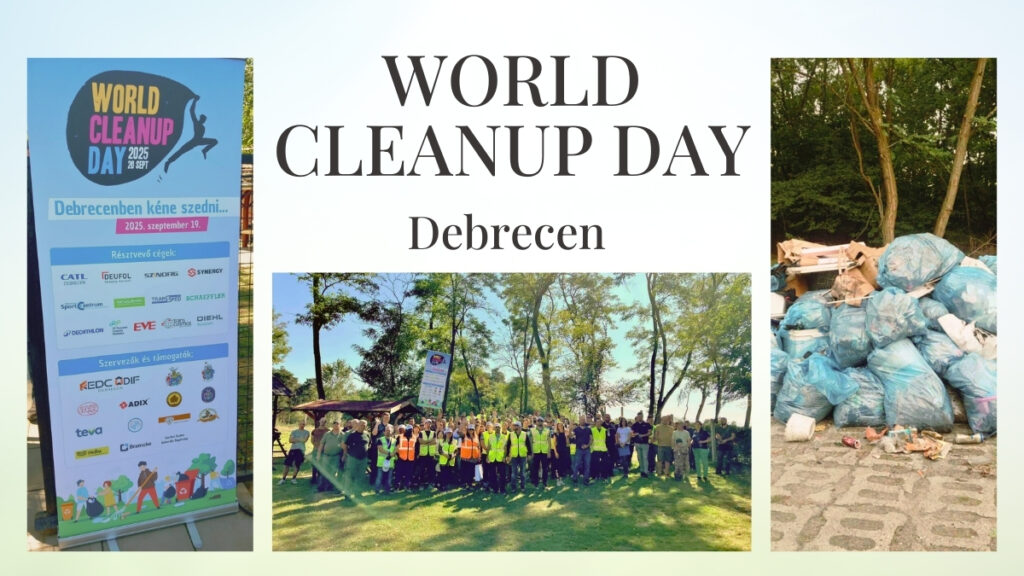
Despite these barriers, ACROSS partners also demonstrated that engagement is possible — and transformative — when the right approaches are used. In Alba Iulia, early co-creation workshops helped bring political leaders into the process by building projects with high visibility and high impact. Debrecen showcased how cross-departmental “horizontal teams” and tangible pilot actions, such as World Cleanup Day, can show staff what CSR looks like in practice, turning abstract concepts into lived experience. Kekava proposed creating a network of CSR ambassadors — motivated individuals capable of sparking cultural change from within. Hannut strengthened continuity by organising regular monthly meetings aligned with the SDGs, supported by coaching and internal communication to build awareness and confidence. And in North Croatia, the development agency DAN SRL drew on insights from previous projects to gradually overcome institutional inertia, demonstrating the value of accumulated experience.
From these shared experiences, a unifying insight emerged across all ACROSS partners: internal engagement is not a supporting element of CSR but its foundation. External impact — whether in sustainability, social inclusion or climate resilience — can only be credible when it grows from an internally coherent organisation. Leadership involvement plays a decisive role. When directors or deputy mayors connect CSR to tangible, meaningful goals, behavioural change accelerates, and employees begin to see responsibility not as a burden but as a shared purpose.
Equally important is the everyday communication that sustains momentum: workshops, informal learning moments, and supportive internal dialogue help prevent CSR from fading into the background during busy administrative cycles. Structural mechanisms — such as horizontal working groups or ambassador networks — can break through bureaucratic rigidity and ensure that responsibility becomes part of routine practice. And partners collectively stressed that starting small is not a compromise but a strategic entry point: early, visible successes create motivation, reduce resistance and build a platform for deeper cultural transformation.
Looking forward, ACROSS partners agreed that cultivating a CSR culture inside municipal administrations is just as essential as engaging businesses or civil society. Municipalities need continuous professional development, accessible knowledge-sharing systems and a steady flow of pilot initiatives that make CSR tangible and legitimate. These are the elements that will help responsibility move from intention to habit — and ultimately embed CSR into the very fabric of local governance.
As partners move toward improving their regional policies in response to these focus areas, one challenge becomes especially clear: future CSR strategies must offer concrete answers for strengthening internal engagement. On this journey, BURST, as the project’s advisory partner, supports municipalities in articulating both their obstacles and their most promising solutions — helping them ask the right questions, structure their ideas and translate shared reflections into actionable pathways. Building on the September discussions, BURST is now synthesising these insights into the project’s Lessons Learned & Ambitions Plan, a key resource that will guide partners as they embed CSR more deeply into local governance and turn responsibility into everyday practice.